Why this choice is more complex than it looks
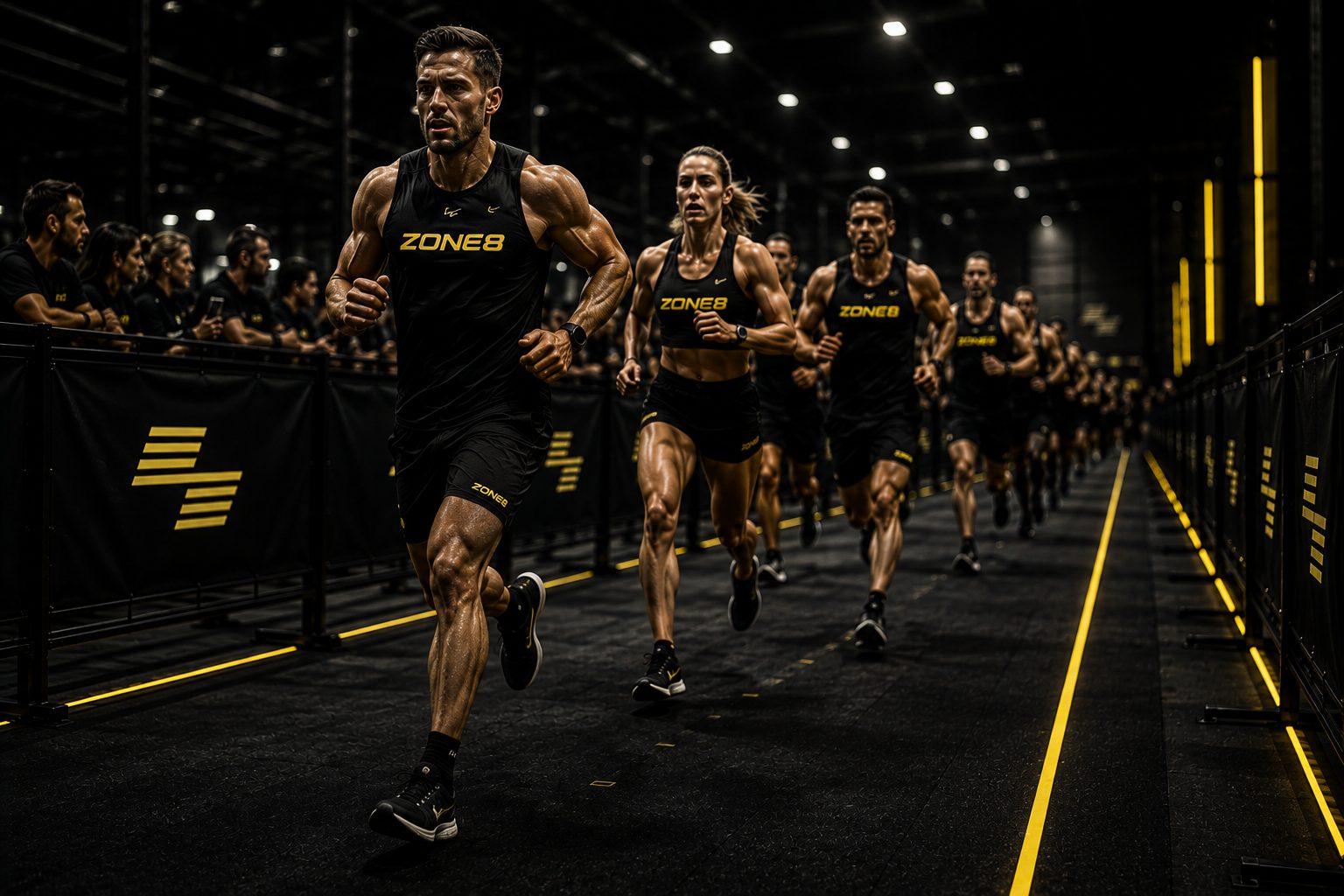
A Hyrox race alternates 8km of running with 8 very different stations: pushing and pulling a sled at ground level, carrying loads, repeated squats, jumping. A single pair of shoes has to handle all of it, with no option to switch between segments — unlike other sports formats where equipment can be adapted to each phase.
It's this forced versatility that makes the choice tricky: a shoe optimized for pure running often sacrifices the stability needed on the sled, while a cross-training shoe built for stability generally lacks the cushioning to absorb 8km combined without discomfort.
The criteria that actually matter
Lateral stability
Stations like sled push and sled pull demand a solid anchor to the ground, with minimal lateral movement of the foot inside the shoe. A sole that's too soft or an upper that flexes too much sideways compromises push efficiency and can cause ankle discomfort under load.
Running cushioning
With 8km combined across eight 1km segments, cushioning matters for general comfort and joint preservation, without needing the cushioning level of a pure marathon shoe, which would hurt stability on the stations.
Ground grip
A sole with good grip helps as much on asphalt or a running track as on transition zones, which are often slippery late in the race due to fatigue and sometimes sweat on the ground.
Heel lockdown
On movements like burpees broad jump or sandbag lunges, a well-secured heel avoids internal slippage in the shoe, which over repeated reps creates uncomfortable friction points or even blisters late in the race.
Drop: a real trade-off point
Drop (the height difference between the front and back of the sole) directly influences the balance between running and stations. A high drop (10-12mm) favors a more natural running stride but can hurt stability on ground-based movements. A low or zero drop favors stability but can fatigue the calves more on the running segments. A compromise around 6-8mm generally suits most profiles, but this still needs individual testing.
Common mistakes
- Buying new shoes right before the race — even the best shoe needs to be tested over several sessions to reveal any discomfort points
- Choosing based on looks or brand alone — without considering the functional criteria specific to a hybrid format
- Neglecting exact sizing — a foot that slides slightly forward on repeated jumps wears out toes faster than a well-fitted size
- Never testing under real conditions — a shoe that's comfortable for walking can prove unsuited to the intense, repeated effort of a full Hyrox session
Fitting your choice to your profile
A profile that's more of a runner, aiming for a fast race time and relying on their 1km segments to build their finish time, will benefit from slightly prioritizing running comfort, even at some cost to pure stability on the sled. Conversely, a profile that's stronger on the stations, mainly looking to avoid losing time on ground-based movements, can prioritize a more stable shoe, even at some cost to comfort on the running segments.
There's no universal answer: the right choice depends on your own strengths and weaknesses, identified through training sessions rather than decided upfront from spec sheets alone.
Breaking in a new pair without risking race day
Even a shoe that fits perfectly out of the box benefits from a proper break-in period. Rubber soles, foam midsoles and upper materials all settle slightly with use, and a shoe that feels great after ten minutes in a store can behave differently after an hour of combined running and lifting. Build up exposure gradually — a few easy runs first, then a full simulation session — rather than jumping straight into your longest, hardest workout in brand new footwear.
Maintenance and lifespan
The Hyrox format is particularly hard on shoes: repeated sled friction, jump impacts, accelerated sole wear on running segments. Regularly check the condition of the sole and heel support — a worn shoe loses stability well before this is visible to the naked eye, which can explain unexplained discomfort or a performance dip late in your prep.
How to test your shoes before the race
The best method is to wear your candidate shoes for several full sessions that reproduce the running-stations alternation, exactly as a structured Hyrox prep program would. This repeated real-world exposure reveals the real friction or discomfort points, impossible to detect from a simple in-store try-on.
Ideally allow several weeks of testing before your race, to give your feet time to adapt and to identify whether an adjustment (lacing, insole) is needed before race day. This lead time also helps catch discomfort that only shows up after several cumulative sessions, well after the first try-on.
Shoes and budget: where to prioritize
Not all price ranges are equal for this type of hybrid format, but price alone isn't a reliable indicator of Hyrox suitability — a premium running shoe can be less suited than a more affordable model built for functional training. Better to prioritize the functional criteria covered above than to rely solely on a model's price positioning. A mid-range shoe that nails stability, grip and reasonable cushioning will consistently outperform an expensive pure-running flagship on race day.
Ultimately, the "best" Hyrox shoe is the one that disappears from your attention during the race — no hot spots, no slipping, no second-guessing your footing on the sled. That quiet confidence is worth more than any single spec on a product page.
Test your gear under real effort conditions
ZONE8's free program alternates running and stations just like in competition, to validate your gear before race day.
Start FreeFAQ
Running or cross-training shoes?
Neither in isolation: Hyrox demands a compromise between the two shoe profiles.
Does drop matter?
Yes, a moderate drop (6-8mm) is generally a good compromise for this hybrid format.
Can you change shoes mid-race?
No, rules don't allow a change mid-event. Your choice must be tested beforehand.
Go further
What equipment for training Hyrox at homeHyrox and injuries: preventing rather than sufferingThe 8 Hyrox stations explained in detail Hyrox Home Workout →Free Hyrox Training Plan →This content is provided for informational purposes and does not replace the advice of a healthcare professional or certified coach. ZONE8 does not recommend any specific brand and receives no commission on sporting goods.